
Introduction: One Goal, Three Very Different Battlegrounds
Kenya currently sits at roughly 12.13% tree cover, according to the latest figures from the Ministry of Environment and Forestry. The national target — enshrined in policy and championed at the highest levels of government — is to reach 30% tree cover by 2032. That means planting an estimated 15 billion trees over the next decade, a target broken down into annual planting seasons that demand not just enthusiasm, but logistics, science, and the right seedlings in the right soil.
Here's the part most campaigns miss: tree planting Kenya is not a single strategy. A Jacaranda that thrives in Nairobi's loamy red soil will struggle in the cracked black cotton soil of Machakos. A Eucalyptus that pays off handsomely in the cool highlands of Nyeri can drain water tables dry in an arid zone. Reforestation Kenya efforts succeed or fail based on ecological matching — planting the right species, in the right zone, with the right aftercare.
This master report breaks down the three core ecological battlegrounds in Kenya's reforestation Kenya story — the Highlands, the Arid and Semi-Arid Lands (ASALs), and Urban Environments — and shows how each contributes to the national 30% forest cover goal. We'll also point you toward our in-depth regional guides, each tackling a specific zone and the species that belong there.
At GreenAngels Tree Nursery, based in Nyahururu, Laikipia County, and serving all 47 counties, we've spent years matching the right seedling to the right ground — backed by an 85%+ survival rate, KEFRI certification, KEPHIS registration, and ISO 14001:2015 environmental management standards. Every seedling that leaves our nursery comes with our 4-month Growth Guarantee, because a tree that dies in month two isn't reforestation — it's a wasted hole in the ground.
Let's look at the numbers, the soils, and the species that will get Kenya to 30%.
Why Kenya's 30% Forest Cover Target Matters
Forest cover isn't just an environmental statistic — it's the backbone of Kenya's water towers, agricultural productivity, and climate resilience. The five major water towers (Mau Forest Complex, Mount Kenya, Aberdare Range, Cherangany Hills, and Mount Elgon) feed nearly all of Kenya's major rivers. When forest cover drops, rainfall patterns become more erratic, rivers run lower, and the agricultural sector — which employs over 40% of Kenya's workforce — feels the impact first.
Quick Stats: Kenya's Forest Cover Journey
| Metric | Figure |
|---|---|
| Current national tree cover | ~12.13% |
| 2032 target | 30% |
| Estimated trees needed | ~15 billion |
| Key water towers at risk | 5 major complexes |
| Counties covered by GreenAngels | All 47 |
Reaching this target requires a zone-specific approach. Let's break down the three pillars.
Pillar 1: The Highlands — Kenya's Timber and Agroforestry Engine
Kenya's central highlands — covering counties like Nyeri, Kiambu, Murang'a, Embu, Meru, and parts of the Rift Valley — sit at elevations where red volcanic soil, reliable rainfall, and cooler temperatures create near-perfect growing conditions for commercial timber species.
This is where Grevillea robusta, Eucalyptus, Cypress, and Pine thrive, often integrated directly into farms through agroforestry systems — trees planted alongside tea, coffee, maize, or dairy fodder. For smallholder farmers, a well-managed woodlot isn't just an environmental contribution; it's a savings account that matures over 7–15 years and pays out in poles, timber, and firewood.
The highlands also host much of Kenya's surviving indigenous montane forest, making restoration here doubly important — both for commercial value and for protecting the catchments that feed rivers like the Tana and Sagana.
If you farm in Nyeri, Kirinyaga, Murang'a, or anywhere in the Central Highlands and you're weighing the long-term returns of a timber woodlot against the risks of leaving land underutilized, our dedicated guide breaks down exactly which species perform best on your soil type and elevation.
→ See: Nyeri & Central Highlands: Commercial Timber & Agroforestry
Pillar 2: The Arid and Semi-Arid Lands (ASALs) — The Frontline of Desertification
Roughly 80% of Kenya's landmass is classified as arid or semi-arid — and this is where the reforestation Kenya story gets its hardest test. Counties like Machakos, Kitui, Makueni, Turkana, and parts of Tharaka-Nithi face cracked black cotton soils, unpredictable rainfall that can fail two seasons in a row, and rising temperatures that push the desertification line further south every decade.
Here, the wrong tree doesn't just fail to grow — it can actively worsen land degradation by competing for scarce groundwater. This is why ASAL reforestation depends almost entirely on indigenous and hardy species: Acacia varieties (Acacia tortilis, Acacia senegal), the drought-tolerant timber tree Melia volkensii (Mukau), and multipurpose species like Moringa and Neem, which provide shade, fodder, soil stabilization, and in Moringa's case, a nutrient-dense food source for communities facing food insecurity.
These trees are doing double duty: rehabilitating degraded land while giving communities, NGOs, and county governments a tangible return on restoration investment — whether that's mukau timber in 8–10 years or moringa leaves within months.
For a deep dive into which species are winning the fight against desertification in Eastern Kenya — and how community agroforestry projects are turning barren land productive again — see our dedicated regional report.
→ See: Machakos & Eastern Region: Battling Desertification in ASALs
Pillar 3: Urban Environments — Cooling Kenya's Concrete Jungles
It's easy to overlook cities in a national reforestation conversation, but urban tree cover delivers some of the highest-impact returns per tree planted. A single mature Jacaranda or Markhamia lutea in a city like Nairobi doesn't just look beautiful during flowering season — it actively cools the surrounding air by several degrees, filters particulate pollution from vehicle exhaust, and creates microclimates that make outdoor spaces usable during the hottest months.
Nairobi and other rapidly urbanizing centers — Kisumu, Mombasa, Nakuru, Eldoret — are experiencing measurable urban heat island effects, where concrete, tarmac, and reduced green cover push city temperatures noticeably higher than surrounding rural areas. Ornamental and flowering trees planted along avenues, in school compounds, office parks, and public spaces are a fast, visible way to push back against this trend while improving air quality for residents.
Urban greening also tends to attract a different kind of stakeholder than rural reforestation — corporates looking for CSR wins, institutions wanting greener campuses, and county governments managing public green spaces.
If you're part of an organization in Nairobi looking at how ornamental and flowering trees can transform a compound, school, or business park — and the CSR opportunities tied to it — our urban greening guide covers species selection and partnership models in detail.
→ See: Nairobi: Urban Greening & Micro-Climates
The Fourth Dimension: Trees That Pay You Back
While the Highlands, ASALs, and Urban zones are defined by geography, there's a parallel reforestation movement defined by economics: the explosive growth of grafted fruit tree planting across nearly every county in Kenya.
Hass avocado, mango, macadamia, citrus, and Pixie orange orchards are transforming smallholder economics — turning quarter-acre plots into income-generating assets while simultaneously contributing green cover. A grafted Hass avocado tree isn't competing with food crops for land use; in many cases, it is the food crop, with the added benefit of canopy cover, soil retention, and carbon sequestration.
This is reforestation that pays for school fees — and it's one of the fastest-growing segments of tree planting Kenya has seen in the last five years.
→ See: The Fruit Revolution: Economic Empowerment Across Counties
The Hands-Free Model: Reforestation for People Who Can't Be on the Ground
Not everyone driving Kenya's 30% forest cover goal lives near the planting site. Corporates running national CSR programs, international climate donors, and members of the Kenyan diaspora investing in land back home all face the same problem: how do you plant trees — and verify they survive — when you're not physically present?
This is where managed planting models like GreenAngels' "Plant With Purpose" services (including Gift of Green and Your Legacy Forest) come in — combining KEFRI-certified seedlings, professional planting teams, geo-tagged monitoring, and our 4-month Growth Guarantee into a single accountable package.
→ See: The "Hands-Free" Restoration Model: For Corporates & Diaspora
What Ties It All Together: The Right Seedling, Every Time
Whether you're planting Grevillea on a Nyeri hillside, Mukau on cracked Machakos soil, Jacaranda along a Nairobi avenue, or a Hass avocado orchard in Murang'a, the single biggest predictor of reforestation success is seedling quality and species matching at the point of planting.
This is why GreenAngels Tree Nursery exists. As a KEFRI-certified, KEPHIS-registered, ISO 14001:2015-compliant nursery based in Nyahururu and serving all 47 counties, we supply:
- Indigenous Trees — for ecosystem restoration and ASAL rehabilitation
- Fruit Trees — premium grafted varieties for commercial and food-security planting
- Timber Trees — for highland agroforestry and long-term investment
- Ornamental & Flower Trees — for urban greening and institutional landscaping
- Spice & Herb Trees — for diversified smallholder income
- Exotic Trees — for specialized commercial and landscaping needs
Every seedling ships with our 85%+ survival rate track record and a 4-month Growth Guarantee — if it doesn't thrive, we replace it. Because reforestation Kenya targets aren't met by trees planted; they're met by trees that survive.
Explore the Full Series
This Major Hub is your gateway to GreenAngels' complete reforestation Kenya series. Dive into the regional and thematic guides below:
- Nairobi: Urban Greening & Micro-Climates
- Machakos & Eastern Region: Battling Desertification in ASALs
- Nyeri & Central Highlands: Commercial Timber & Agroforestry
- The Fruit Revolution: Economic Empowerment Across Counties
- The "Hands-Free" Restoration Model: For Corporates & Diaspora
Related Topics
Related Articles
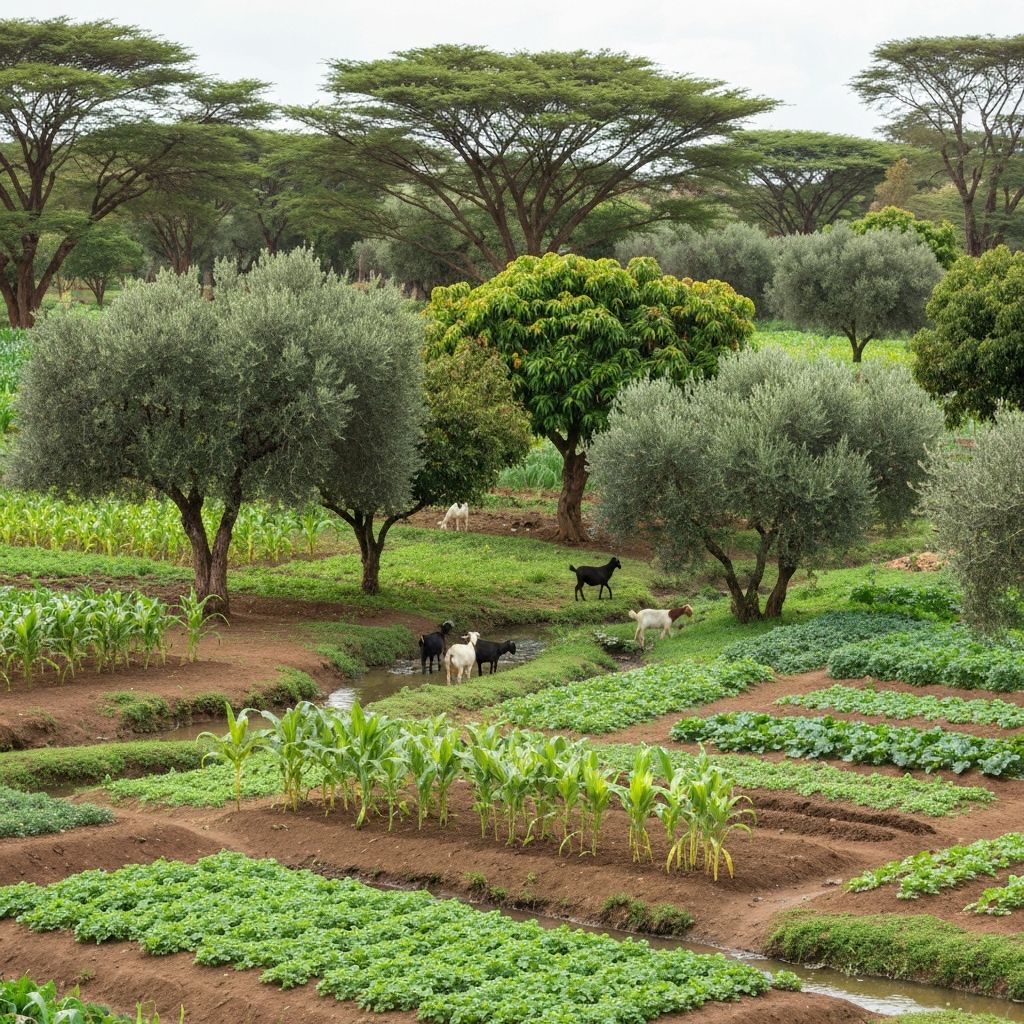
Urban Greening Nairobi: How Trees Are Cooling the City and Cleaning Its Air
Discover how ornamental and flowering trees like Jacaranda, Markhamia Lutea, and Bottle Brush are transforming Nairobi's heat islands into livable green spaces — and how your business or institution can be part of it.
Read More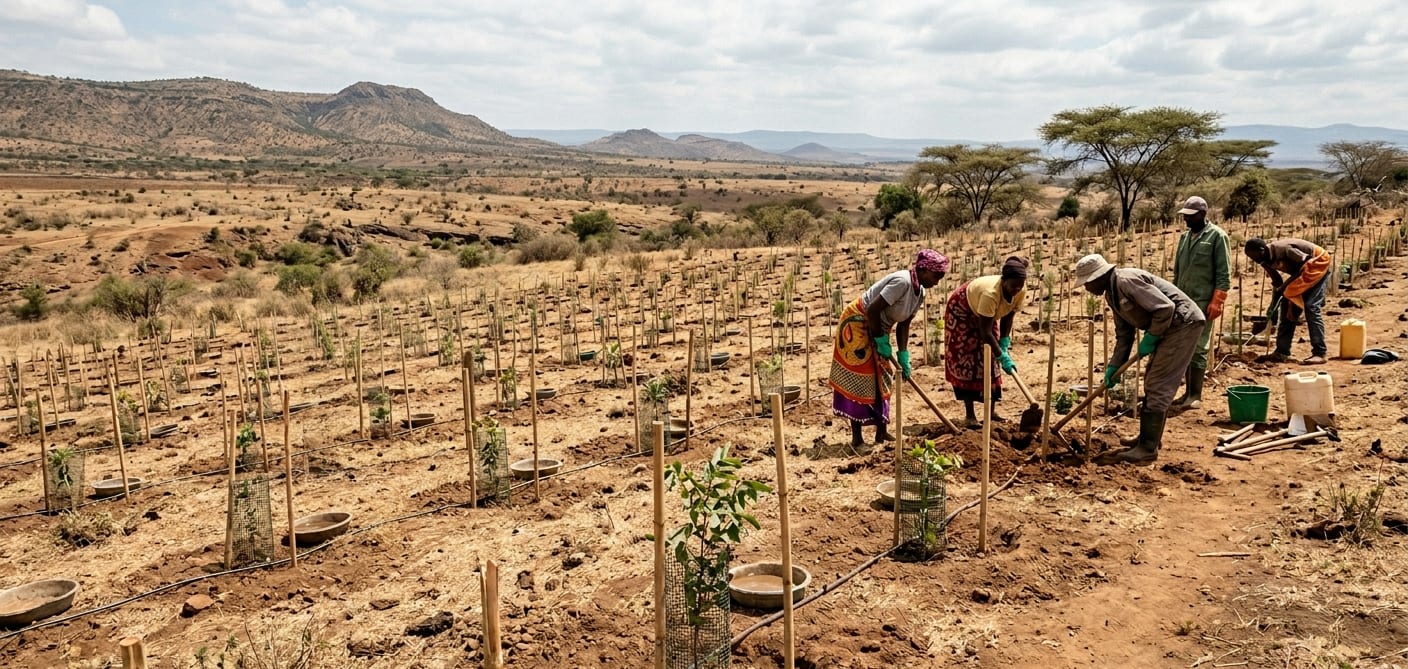
Battling Desertification in Machakos and Eastern Kenya: The Trees That Are Turning Drylands Green Again
From cracked black cotton soil to thriving Mukau woodlots — discover how Acacia, Moringa, Neem, and other hardy indigenous trees are reversing desertification across Machakos and Eastern Kenya's ASALs.
Read More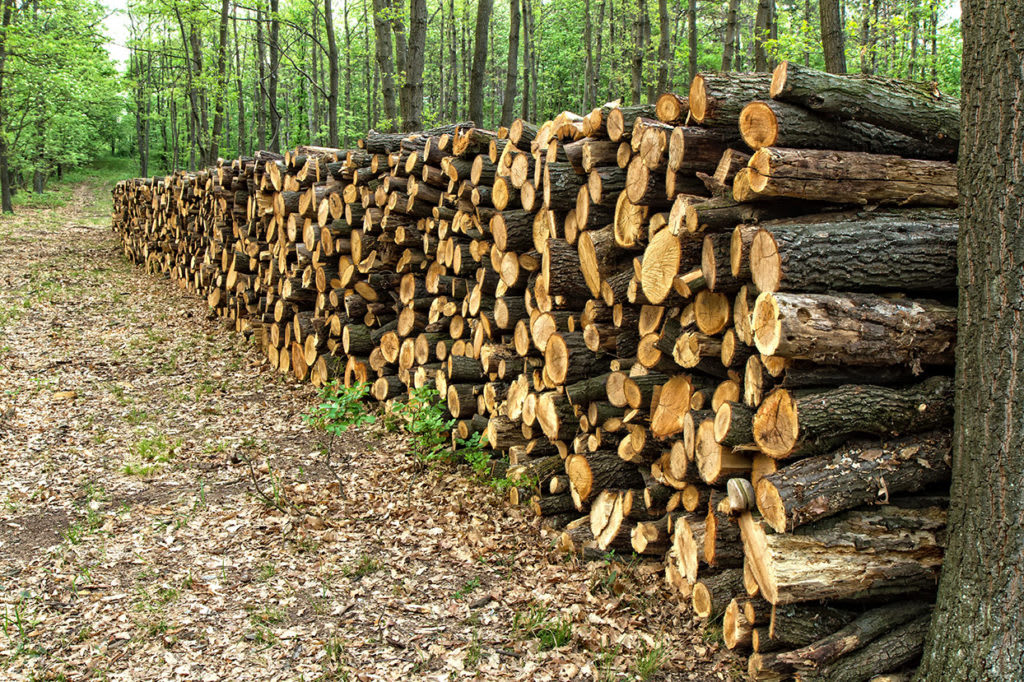
Commercial Timber in Nyeri and the Central Highlands: Turning Farmland Into a Long-Term Forestry Investment
Grevillea, Eucalyptus, Cypress, and Pine are transforming idle corners of Central Kenya's farms into long-term income. Here's how smallholder and commercial farmers in Nyeri and the Highlands are building timber wealth through agroforestry.
Read More