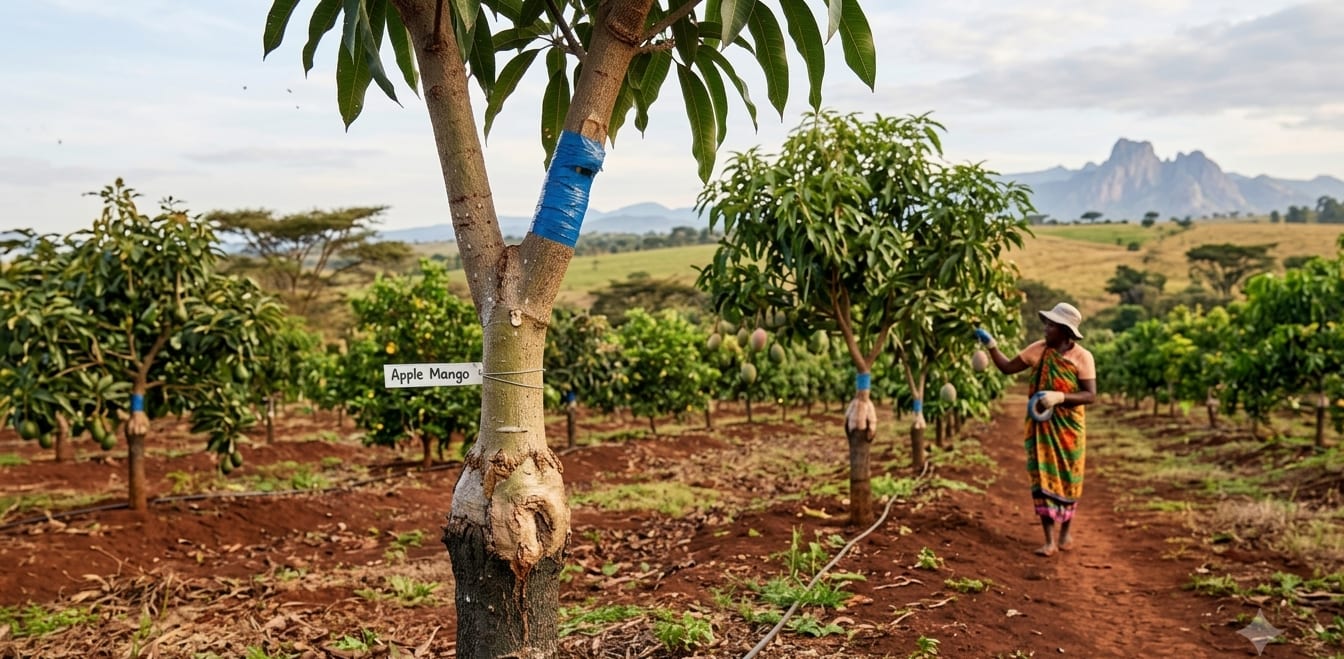
Introduction: The Tree That Pays Your School Fees
Across Kenya, a quiet economic transformation has been taking root — literally — on smallholder farms from Murang'a to Kisii, from Embu to Meru. Where a generation ago a quarter-acre plot might have grown only maize and beans, today it's increasingly likely to host rows of grafted Hass avocado trees, their canopies steadily filling in, each one representing a future income stream that didn't exist before.
This is the Fruit Revolution — and it's arguably the fastest-growing segment of tree planting Kenya has seen in recent years. Unlike timber, which pays off over a decade, or indigenous restoration species, which deliver primarily ecological returns, premium grafted fruit trees offer something different: relatively fast, recurring, and substantial cash income, often beginning within 3-4 years of planting and continuing for decades.
This guide is part of GreenAngels' reforestation Kenya series. For the bigger picture on how fruit tree planting fits alongside highland timber, ASAL restoration, and urban greening in Kenya's push toward 30% forest cover, see our master report.
→ See: The Pillars of Kenya's Reforestation
Why Fruit Trees Are Different: Environmental Impact Plus Income
Most reforestation conversations focus on environmental outcomes — carbon sequestration, soil stabilization, water table protection. Those benefits absolutely apply to fruit trees too: a mature avocado or mango tree provides substantial canopy cover, supports pollinators, and contributes to soil health just like any other tree.
But fruit trees add a dimension that changes the entire economic calculation for farmers: the tree itself becomes the cash crop. There's no tension between "land for the environment" and "land for income" — a well-managed orchard delivers both simultaneously. This is a major reason fruit tree planting has spread so quickly across counties that might otherwise see tree planting as a cost rather than an investment.
The Premium Species Driving the Revolution
Hass avocado
If one species symbolizes Kenya's fruit revolution, it's Hass avocado. Driven by strong export demand — Kenyan avocados are shipped to markets across Europe, the Middle East, and beyond — Hass avocado has become one of the most sought-after grafted varieties in the country. A well-maintained Hass avocado tree can produce substantial yields annually once mature, with export-grade fruit commanding premium prices. For farmers in Murang'a, Kiambu, Kandara, Embu, and similar mid-to-high altitude zones with good rainfall, Hass avocado orchards have become a genuine pathway to middle-class income from smallholder land.
Mangoes
Mango remains one of Kenya's most widely planted and consumed fruits, with strong domestic demand and growing processing industries (juices, dried fruit) creating additional market channels beyond fresh fruit sales. Grafted mango varieties offer faster maturity and more consistent fruit quality than traditional seedling-grown trees, and perform well across a wider range of altitudes and climates than avocado — making mango a versatile option for counties from the coast to the lower midlands.
Macadamia
Macadamia has quietly become one of the most lucrative tree crops available to Kenyan farmers, with strong export demand for the nuts driving consistently attractive prices. Macadamia trees are also notably long-lived and productive for decades once established, making them a true multi-generational asset — a tree planted by a parent often continues producing income well into the next generation's adulthood.
Citrus (Oranges, Lemons, Tangerines)
Citrus varieties offer relatively fast returns and strong domestic market demand, with fruit used fresh, in juices, and increasingly in value-added products. Citrus trees are also comparatively forgiving in terms of altitude and soil range, making them accessible to farmers across a broad swathe of counties.
Pixie Oranges
A more specialized, high-value citrus variety, Pixie oranges have gained attention for their premium market positioning — smaller, easy-peel fruit with strong sweetness that commands better prices than standard oranges in both local high-end markets and export channels. For farmers looking to differentiate from commodity citrus production, Pixie represents a premium niche worth considering.
Quick Reference: Fruit Trees and Their Economic Profile
| Species | Time to First Harvest | Market Strength | Best Suited For |
|---|---|---|---|
| Hass avocado | ~3-4 years | Strong export demand | Mid-high altitude, good rainfall |
| Mango | ~3-5 years | Strong domestic + processing demand | Wide altitude/climate range |
| Macadamia | ~4-6 years | Strong export demand, long productive life | Mid-high altitude |
| Citrus (general) | ~3-4 years | Strong domestic demand | Broad range |
| Pixie Orange | ~3-4 years | Premium niche market | Similar to general citrus |
Food Security Meets Cash Crop: A Dual Mandate
Beyond their income potential, fruit trees occupy a unique position in Kenya's broader food security conversation. Unlike pure cash crops grown for export or industrial processing, fruit trees produce something a family can eat directly — avocados, mangoes, oranges — while also generating surplus that can be sold.
This dual mandate matters enormously in counties where both nutrition and income are pressing concerns. A household with a handful of productive fruit trees has a buffer: in lean months, fruit can supplement the household diet directly; in good market years, surplus production becomes meaningful cash income. This is part of why fruit tree planting has resonated so strongly even in regions that have historically focused on subsistence food crops — the trade-off between "food for the family" and "income for the family" simply doesn't exist in the same way it does with non-edible cash crops.
From Smallholder Plots to Commercial Orchards
While much of the fruit revolution has happened at the smallholder level — a few dozen trees integrated into an existing farm — there's also significant growth in dedicated commercial orchard setups, particularly for Hass avocado and macadamia, where export market demand justifies larger-scale, more intensively managed plantings.
For commercial orchard development, success depends heavily on:
- Sourcing true-to-type grafted seedlings — a critical issue, as off-type or poorly grafted seedlings can take years to reveal disappointing fruit quality, by which point significant land and time have already been invested
- Site selection matched to species requirements — altitude, soil drainage, and rainfall patterns all affect which species will perform best
- Spacing and orchard design for long-term productivity and ease of harvest
- Establishment-phase care, where young grafted trees are particularly vulnerable before their root systems are established
This last point is where GreenAngels' 4-month Growth Guarantee becomes especially relevant for fruit tree planting. A grafted fruit seedling represents a multi-year investment before it produces its first harvest — losing seedlings in the establishment phase doesn't just mean replanting cost, it means restarting the clock on years of waiting for that first crop. Every grafted Hass avocado, mango, macadamia, citrus, and Pixie orange seedling from GreenAngels is KEFRI-certified and KEPHIS-registered, backed by our 85%+ survival rate — and if a seedling doesn't establish within the first four months, we replace it, protecting the timeline on your orchard investment from day one.
Fruit Trees as Part of a Bigger Land-Use Strategy
For many farmers, fruit trees aren't a standalone decision — they're one piece of a broader land-use puzzle that might also include timber woodlots, indigenous trees for boundaries and erosion control, or spice and herb trees for additional diversification.
In the Central Highlands, for instance, it's increasingly common to see Hass avocado orchards planted alongside Grevillea boundary trees — combining a medium-term cash crop with a long-term timber asset on the same farm.
→ See: Nyeri & Central Highlands: Commercial Timber & Agroforestry
When Fruit Trees Meet Drier Counties
Fruit tree planting isn't limited to the well-watered highlands. In parts of Eastern Kenya's ASAL counties — particularly areas with borehole access or proximity to seasonal rivers — mango and citrus varieties suited to warmer, drier conditions have found a place alongside the indigenous restoration species that dominate desertification-focused planting.
→ See: Machakos & Eastern Region: Battling Desertification in ASALs
Plant Trees That Pay You Back
Whether you're adding a handful of Hass avocado trees to a quarter-acre plot in Murang'a, establishing a macadamia block as a long-term family asset, or developing a commercial citrus orchard for export markets, the foundation of every successful fruit tree investment is the same: true-to-type, well-grafted, healthy seedlings from a certified source.
GreenAngels Tree Nursery supplies KEFRI-certified, KEPHIS-registered grafted Hass avocado, mango, macadamia, citrus, and Pixie orange seedlings — backed by our 85%+ survival rate and 4-month Growth Guarantee — to farmers and commercial orchard developers across all 47 counties.
[Contact GreenAngels Tree Nursery to order grafted fruit tree seedlings or discuss your orchard project.]
Related Topics
Related Articles

The Pillars of Kenya's Reforestation: How Highlands, ASALs, and Cities Are Rebuilding Our 30% Forest Cover Target
Kenya is racing toward a 30% forest cover target by 2032. Discover how the Highlands, Arid and Semi-Arid Lands, and urban centers each play a unique role in reforestation Kenya efforts — and how wholesale tree nursery Kenya suppliers like GreenAngels make it possible.
Read More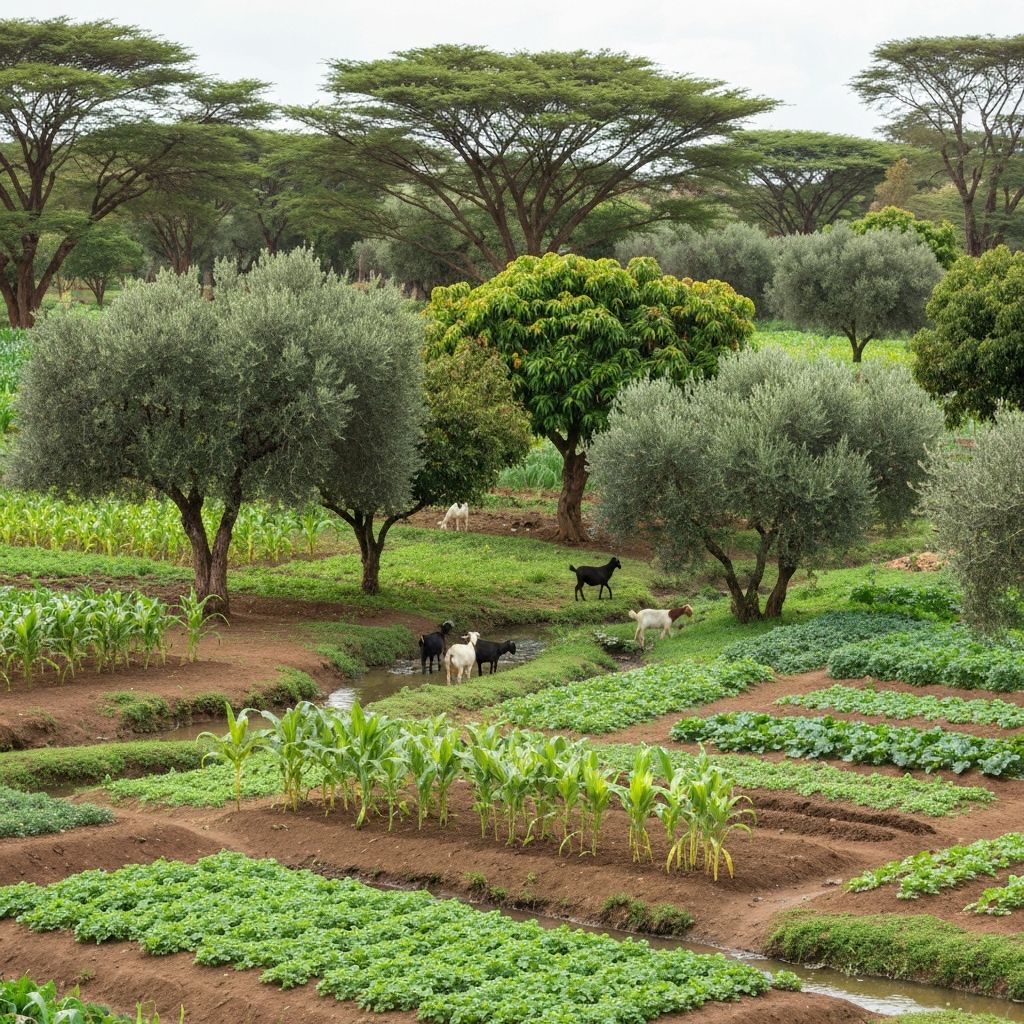
Urban Greening Nairobi: How Trees Are Cooling the City and Cleaning Its Air
Discover how ornamental and flowering trees like Jacaranda, Markhamia Lutea, and Bottle Brush are transforming Nairobi's heat islands into livable green spaces — and how your business or institution can be part of it.
Read More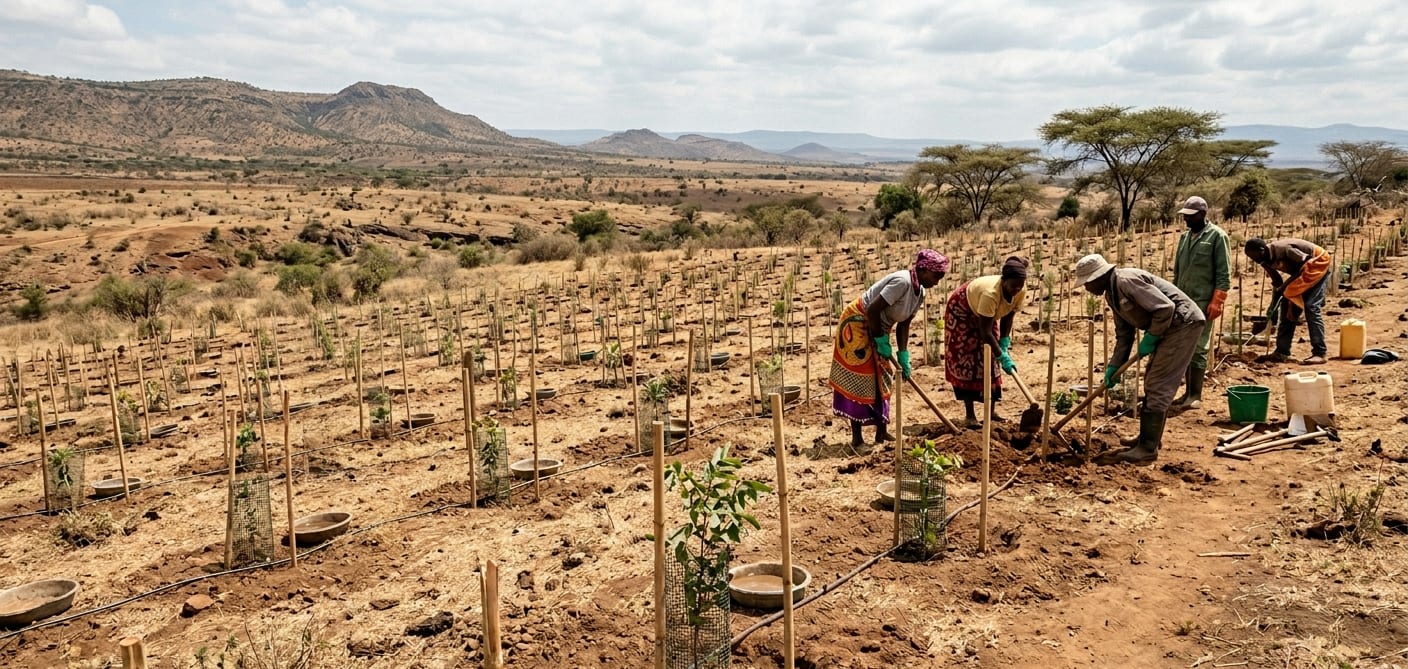
Battling Desertification in Machakos and Eastern Kenya: The Trees That Are Turning Drylands Green Again
From cracked black cotton soil to thriving Mukau woodlots — discover how Acacia, Moringa, Neem, and other hardy indigenous trees are reversing desertification across Machakos and Eastern Kenya's ASALs.
Read More