
Introduction: Climate Action Without a Plane Ticket
For a Kenyan living in London, Dubai, or Minneapolis, the desire to contribute to home isn't in question — it's the logistics that get in the way. How do you plant a tree on family land in Kiambu, or fund a restoration project in Makueni, when you're 8,000 kilometers away and can't personally show up to dig the hole, water the seedling, or check on it three months later?
The same question, in a different form, faces corporate sustainability teams in Nairobi. A company might have a CSR budget allocated for environmental impact and a genuine desire to contribute to Kenya's 30% forest cover goal — but no internal team with the expertise to manage seedling sourcing, planting logistics, and survival monitoring across multiple sites.
This is the gap that GreenAngels' "Plant With Purpose" model is built to close — a hands-free approach to reforestation that handles everything from certified seedling sourcing to planting to verified monitoring, so that climate action doesn't require a plane ticket, a planting team, or specialized agricultural knowledge.
This guide is part of GreenAngels' reforestation Kenya series. For the full picture of how this model fits into the national reforestation push, see our master report.
→ See: The Pillars of Kenya's Reforestation
The Core Problem With "Just Send Money"
Tree planting has, unfortunately, developed something of a trust problem globally. Stories abound of donations made toward planting initiatives where it's genuinely unclear how many trees were planted, where, with what species, and — critically — how many survived past the first dry season.
For a corporate donor or a diaspora investor, this uncertainty isn't a small detail. It's the difference between a meaningful environmental contribution and a donation that effectively evaporates — funding seedlings that may never have been planted correctly, in the wrong location, with no one checking whether they lived or died.
The "Hands-Free" Restoration Model exists to solve exactly this problem through three components: certified sourcing, professional execution, and verified monitoring.
Component 1: Certified Seedling Sourcing
Every tree planted under this model starts with seedlings from GreenAngels Tree Nursery — KEFRI-certified, KEPHIS-registered, and grown under ISO 14001:2015 environmental management standards. This matters because seedling quality is the single biggest determinant of whether a planting project succeeds or quietly fails over the following months.
Species selection is matched to the specific planting site — whether that's indigenous Acacia and Mukau for an ASAL restoration project in Eastern Kenya, ornamental and indigenous trees for an urban greening initiative in Nairobi, or timber species for a highland agroforestry program.
→ See: The Pillars of Kenya's Reforestation
Component 2: Professional Planting Execution
Rather than relying on ad-hoc volunteer planting days — which, while well-intentioned, often result in poorly planted seedlings with low survival odds — the Hands-Free model uses trained planting teams who follow proper planting protocols: correct hole sizing, soil preparation, spacing, and initial watering and protection measures.
This is particularly important for ASAL restoration projects, where the difference between a seedling planted correctly at the start of the rains versus one planted hastily during a volunteer event can be the difference between an 85% survival rate and a much lower one.
Component 3: Remote Monitoring and Verification
This is where the model earns the trust that "just send money" approaches struggle to provide. Planted trees are monitored through the critical establishment period, with verification that allows donors — whether a corporate sustainability team or an individual in the diaspora — to see tangible evidence that their contribution resulted in real, surviving trees on real land.
Combined with GreenAngels' 4-month Growth Guarantee, this monitoring isn't just for show — it's directly tied to accountability. If seedlings within the guarantee period aren't thriving, they're replaced, and the project's survival numbers reflect that active management rather than a one-time "plant and forget" approach.
"Gift of Green": A Different Kind of Gift
For individuals — whether in Kenya or abroad — looking for a meaningful gift for a birthday, anniversary, graduation, or memorial, Gift of Green offers an alternative to conventional presents: a tree (or trees) planted on behalf of the recipient, with the environmental impact serving as the gift itself.
This has particular resonance for the diaspora community, where sending a physical gift across borders is often expensive and logistically complicated, but contributing to something tangible back home — a tree that will be standing in Kenya for decades — carries genuine emotional weight.
"Your Legacy Forest": Long-Term Land Investment From Anywhere
For diaspora members who own land in Kenya — whether inherited family land or a parcel purchased as an investment — one of the most common challenges is productive land use from a distance. Land that sits idle doesn't just represent a missed economic opportunity; in many cases it can become vulnerable to disputes, encroachment, or simply gradual degradation from lack of management.
Your Legacy Forest addresses this directly: a managed planting program on the landowner's property, using species selected for the specific ecological zone — whether that's a timber woodlot in the highlands, a fruit orchard generating income, or an indigenous restoration planting on marginal land.
The result is land that goes from idle to productive — generating either long-term timber value, fruit income, or simply meaningful environmental impact — all coordinated remotely, with verification that gives the landowner confidence in what's actually happening on their property.
→ See: The Fruit Revolution: Economic Empowerment Across Counties
For Corporate CSR Teams: A Scalable, Verifiable Impact Program
Corporate sustainability teams face a particular challenge: CSR budgets need to translate into reportable, defensible impact metrics — not just "we donated money toward tree planting" but "we funded X seedlings, of Y species, planted across Z sites, with verified survival rates."
The Hands-Free model is built around exactly this kind of reporting structure. Whether a company wants to fund:
- An urban greening project at partner schools or public spaces in Nairobi
- A restoration project in ASAL counties as part of a broader environmental commitment
- A diversified planting program spanning multiple ecological zones to align with a national-scope sustainability narrative
— the underlying infrastructure of certified seedlings, professional planting, and verified monitoring remains consistent, making it straightforward to scale a program up or down based on budget while maintaining the same standards of accountability.
→ See: Nairobi: Urban Greening & Micro-Climates
Quick Reference: The Hands-Free Model at a Glance
| Component | What It Solves |
|---|---|
| KEFRI-certified, KEPHIS-registered seedlings | Removes uncertainty about seedling quality and species suitability |
| Professional planting teams | Removes risk of poor planting technique reducing survival |
| Remote monitoring & verification | Provides accountability and tangible proof of impact |
| 4-month Growth Guarantee | Protects the investment during the highest-risk establishment period |
| Gift of Green | A meaningful, low-logistics gift option for individuals |
| Your Legacy Forest | Productive land management for diaspora landowners |
International Climate Donors: A Familiar Standard, Locally Delivered
For international climate donors and development partners, the components of the Hands-Free model — certified sourcing, professional execution, verified monitoring, replacement guarantees — will be familiar as the basic hallmarks of any credible restoration program. What GreenAngels offers is this same standard, delivered locally across Kenya's diverse ecological zones, from ASAL restoration in Eastern Kenya to highland agroforestry in Nyeri to urban greening in Nairobi — with the species-matching expertise to ensure that funded trees are appropriate for wherever they're planted.
→ Read the Full Picture on Kenya's Ecological Zones: The Pillars of Kenya's Reforestation
Start Your Hands-Free Reforestation Project Today
Whether you're a member of the diaspora wanting to plant a Legacy Forest on family land, an individual looking for a Gift of Green for someone special, or a corporate or NGO team scoping out a verifiable reforestation partnership, GreenAngels Tree Nursery's "Plant With Purpose" model handles the certified seedlings, the planting, and the monitoring — backed by our 85%+ survival rate and 4-month Growth Guarantee — so your contribution to Kenya's forests becomes real trees, verified.
[Contact GreenAngels Tree Nursery to discuss Gift of Green, Your Legacy Forest, or a corporate/NGO partnership.]
Related Topics
Related Articles

The Pillars of Kenya's Reforestation: How Highlands, ASALs, and Cities Are Rebuilding Our 30% Forest Cover Target
Kenya is racing toward a 30% forest cover target by 2032. Discover how the Highlands, Arid and Semi-Arid Lands, and urban centers each play a unique role in reforestation Kenya efforts — and how wholesale tree nursery Kenya suppliers like GreenAngels make it possible.
Read More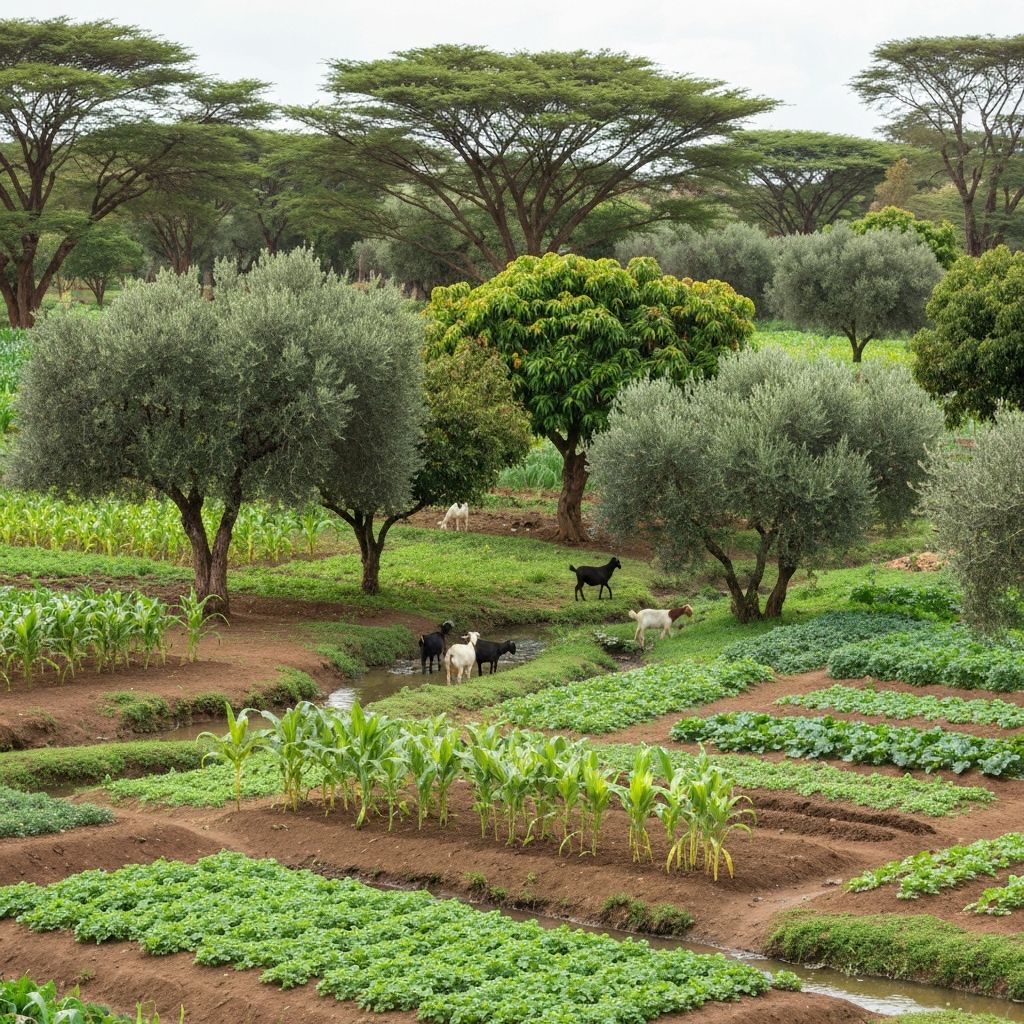
Urban Greening Nairobi: How Trees Are Cooling the City and Cleaning Its Air
Discover how ornamental and flowering trees like Jacaranda, Markhamia Lutea, and Bottle Brush are transforming Nairobi's heat islands into livable green spaces — and how your business or institution can be part of it.
Read More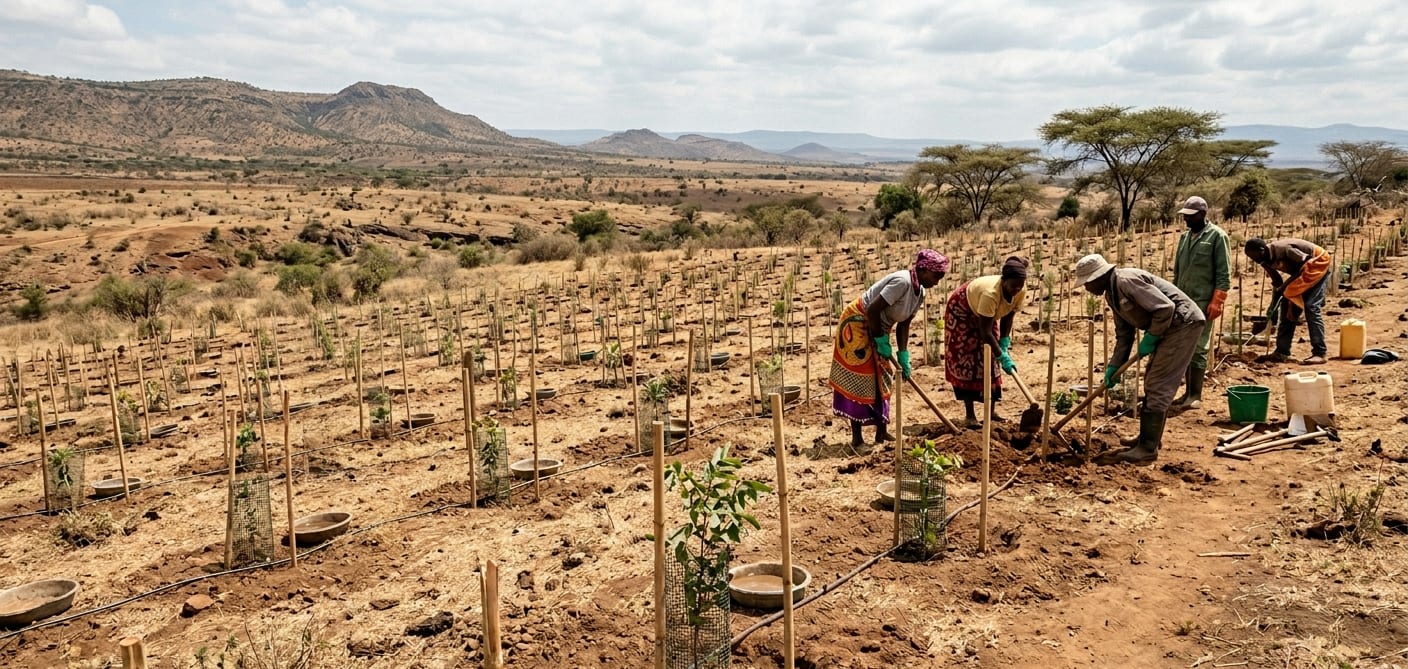
Battling Desertification in Machakos and Eastern Kenya: The Trees That Are Turning Drylands Green Again
From cracked black cotton soil to thriving Mukau woodlots — discover how Acacia, Moringa, Neem, and other hardy indigenous trees are reversing desertification across Machakos and Eastern Kenya's ASALs.
Read More