Introduction
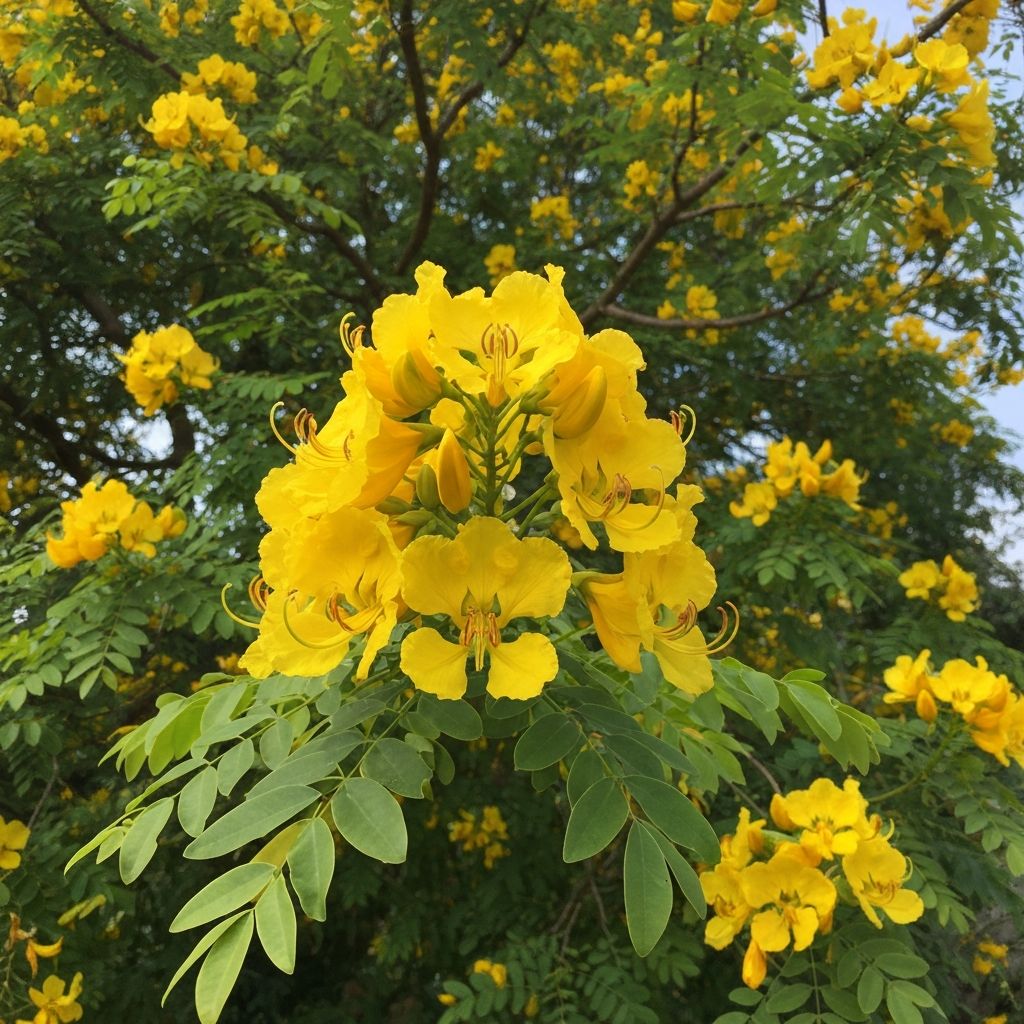
A wall keeps people out. A lawn keeps the plot tidy. But it is a flowering tree that makes a compound feel like somewhere worth living. Ask anyone what they remember about a great Kenyan garden and they will describe colour — a Jacaranda throwing purple across the driveway in October, a Flame tree lighting up the boundary in December, a Nandi Flame drawing sunbirds to the window every morning.
Ornamental trees are the highest-return planting decision most property owners make, and almost nobody makes it well. Trees get chosen on impulse — a seedling seen at a market, a species a neighbour has — and planted in the wrong place, at the wrong spacing, for the wrong purpose. Five years later the tree is either dominating a structure it was never meant to be near, or it is one of three sad stems on a plot that still looks bare.
This guide is written for homeowners, estate managers, hospitality properties, and schools across Kenya who want a garden with genuine seasonal character. It covers what actually makes a tree ornamental, which species flower when in our climate, how to match a tree to your specific plot, and how to plant so that the canopy you imagine is the canopy you get.
Section 1: What "Ornamental" Actually Means
"Ornamental" is not a botanical category — it is a design one. An ornamental tree earns its place by performing visually across the year, through one or more of these assets:
- Flowers — the most sought-after trait, and the one most people plant for
- Form and architecture — tiered, weeping, columnar, or umbrella shapes that hold a garden together even without blooms
- Foliage — colour, texture, and density; a tree with deep burgundy or silver-blue foliage reads as intentional design
- Bark and structure — visible in the dry season when flowering species are bare
- Wildlife value — sunbirds, weavers, bees, and butterflies that make a garden feel alive
The critical insight: flowering is seasonal, but structure is permanent. The best Kenyan gardens pair a showy flowering species with at least one architecturally strong evergreen, so the plot looks designed in March as well as in October.
Section 2: Kenya's Flowering Calendar
Because Kenya's highlands sit near the equator with bimodal rains, most ornamental species have predictable flowering windows tied to the dry season and the onset of rains. Plan around this calendar and your compound has colour for most of the year.
| Season | Months | What's in Flower |
|---|---|---|
| Long dry / early long rains | Jan–Apr | Bottlebrush (crimson spikes), Markhamia lutea (yellow trumpets), Tabebuia (pink and white trumpet displays) |
| Long rains | Apr–Jun | Nandi Flame (orange-red blooms), lush foliage across all species |
| Mid-year dry | Jul–Sep | Nandi Flame peak, Tabebuia second flush in some areas |
| Short rains | Oct–Dec | Jacaranda (purple peak), Flame Tree / Delonix (scarlet peak), Bougainvillea at full intensity |
A well-composed planting of just four species — Jacaranda, Flame tree, Nandi Flame, and Bottlebrush — delivers visible flowering in every quarter of the year.
Section 3: The Best Ornamental Trees for Kenyan Gardens
Jacaranda (Jacaranda mimosifolia)
The signature flowering tree of Nairobi, and for good reason. Come October, mature Jacarandas produce a canopy of trumpet-shaped purple blooms so dense the foliage almost disappears — then drop a violet carpet across the driveway that is half the pleasure. It grows 10–15 metres with a broad, spreading crown and performs beautifully in Karen, Runda, Lavington, and Limuru. Give it room: it needs 6–8 metres of clearance from structures and underground lines. Flowering peaks in the short rains, and a tree grown from good nursery stock will often show first flowers in its fourth or fifth season.
Flame Tree / Flamboyant (Delonix regia)
If Jacaranda is Nairobi's purple signature, Delonix regia is its scarlet one. The Flame tree produces vast clouds of red-orange flowers from October through December, held against a flat, spreading canopy that is arguably the most beautiful form of any tree on this list. It is a large tree — 12 metres and wider than it is tall — so it belongs on generous plots, avenues, and open lawn positions where its umbrella silhouette can be read whole. Drought-tolerant once established, and genuinely low-maintenance.
Nandi Flame / African Tulip (Spathodea campanulata)
The workhorse of Kenyan ornamental planting — indigenous, fast (1.5–2 metres per year), and flowering in vivid orange-red clusters for much of the year, with peak displays around the long rains and mid-year. It is also a bird magnet: sunbirds feed at the blooms daily, which is why this is the species we recommend most often to homeowners who want wildlife in the garden. Grows 8–12 metres, tolerates both red volcanic and moderately drained black cotton soils, and is available as established stock that flowers early.
Markhamia lutea (Nile Tulip)
An indigenous flowering tree that does everything well and nothing badly. Yellow trumpet flowers appear in flushes through the year, the foliage is dense and glossy, the root system is well-behaved near paving and plumbing, and it fixes nitrogen in the surrounding soil. Growth is rapid on well-drained red soils — expect 1–1.5 metres per year once established. For structured garden designs in Gigiri, Kyuna, or Muthaiga, it is one of the safest high-value choices available.
Bottlebrush (Callistemon species)
A different scale of ornamental — typically 4–7 metres — and the best species on this list for colour at eye level. Crimson flower spikes appear in heavy flushes through the long dry season and into the rains, drawing bees and birds continuously. Bottlebrush works as a boundary tree, a patio-side specimen, or an informal flowering hedge line, and it is exceptionally tolerant of pruning. A strong choice for smaller compounds in Syokimau, Kitengela, or Ruaka where a Jacaranda would overwhelm the plot.
Ornamental Trees at a Glance
| Tree | Flower Colour | Peak Season | Mature Height | Best Position |
|---|---|---|---|---|
| Jacaranda | Purple | Oct–Dec | 10–15 m | Open lawn, driveway avenue (large plots) |
| Flame Tree | Scarlet-orange | Oct–Dec | 12 m+ | Avenue, open ground, estate entrance |
| Nandi Flame | Orange-red | Apr–Sep | 8–12 m | Garden backdrop, wildlife gardens |
| Markhamia lutea | Yellow | Year-round flushes | 8–12 m | Near structures, mixed borders |
| Bottlebrush | Crimson | Jan–Jun | 4–7 m | Small compounds, boundaries, patios |
Section 4: Indigenous or Exotic — Which Should You Plant?
Both have genuine roles, and the best gardens use both deliberately.
Indigenous species — Nandi Flame, Markhamia lutea, Olea africana (wild olive), and Kigelia (sausage tree) — are adapted to our rainfall variability, support native pollinators and birds, and carry a long-term ecological argument that increasingly matters to estates, lodges, and schools with sustainability commitments. Wild olive in particular is a magnificent slow-growing specimen tree for large properties: silver-backed evergreen foliage, remarkable longevity, and almost zero maintenance.
Exotic species — Jacaranda, Flame tree, Bottlebrush, Tabebuia — deliver the most dramatic flowering displays and are thoroughly proven in Kenyan conditions after decades of planting. They are the right answer when colour impact is the primary brief.
The practical rule: use exotics where you want seasonal theatre, use indigenous species where you want permanence, shade, and ecological value. A compound with one Jacaranda, one Nandi Flame, and a Podocarpus or wild olive anchor is designed for the next thirty years.
Section 5: Placement — Where Each Tree Should Actually Go
Species selection is only half the decision. Placement determines whether a tree becomes an asset or a liability.
- Specimen trees (Jacaranda, Flame tree): give them lawn space and sky. Planted 7–10 metres from the house and away from septic lines, they become the visual anchor of the property. Planted 2 metres from a wall, they become a repair bill.
- Flowering backdrop trees (Nandi Flame, Markhamia): position them to frame views from the house — behind a lawn, at the far boundary, or screening a service area.
- Eye-level colour (Bottlebrush): use near outdoor living areas — patios, pool edges, front entrances — where flower detail is seen close up.
- Small plots: one well-chosen tree beats three crowded ones. In a 50 × 100 plot, a single Bottlebrush or Markhamia delivers more beauty than three canopy trees competing for light and root space.
The same spacing discipline from our hedging work applies here: string your lines, mark positions before digging, and plant at least 2–3 metres from walls and driveways for anything above 8 metres mature height.
Section 6: Planting and Care — Getting Flowering Within Three Seasons
Even the best ornamental tree will sulk for years if planted badly. The protocol below is what we use at Green Angels Tree Nursery to get clients to first bloom quickly.
Soil Preparation
On black cotton soils (Syokimau, Athi River, Kitengela), dig at least twice the root ball width and backfill with roughly 30% sharp sand and 30% compost mixed into the native soil. Plant on a slight mound so the root collar never sits in standing water. On red volcanic soils (Karen, Runda, Kiambu, Limuru), generous compost and a handful of phosphate fertiliser at planting is sufficient — these soils are forgiving.
Establishment Watering
For the first dry season after planting, give young trees a deep soak of 20–30 litres, two to three times per week. Deep and infrequent beats shallow and daily — it trains roots down. During the brutal January–March stretch, never skip a session: that dry spell is where most ornamental trees are lost permanently.
Mulching and Staking
A 10–15 cm ring of organic mulch around the base — kept 5 cm clear of the stem — halves water loss and moderates root temperature. Stake trees above 1 metre with two angled supports and soft ties, and remove the stakes after 12 months so the trunk develops proper taper and anchorage.
Pruning for Form
Formative pruning in years one and two shapes the tree permanently. Remove inward-growing and crossing branches to establish a single strong leader for Nandi Flame and Markhamia, or an open structure for Jacaranda and Flame tree. Never top an ornamental tree — it ruins the silhouette that made you buy it.
First Flowers
With grafted or well-raised nursery stock, good soil preparation, and consistent establishment watering, expect first meaningful flowering on most species in this guide within 2 to 4 seasons. Seed-grown or poorly raised stock can take twice as long — which is the single biggest reason to buy from a verified nursery.
Find Your Ornamental Trees at Green Angels Tree Nursery
Whether you want a Jacaranda for a Karen lawn, a line of Bottlebrush for a Kitengela boundary, or an indigenous Nandi Flame to bring sunbirds into a school compound, Green Angels Tree Nursery has healthy, well-established ornamental stock ready to plant this season.
Green Angels Tree Nursery supplies:
- ✅ Jacaranda, Flame tree, Nandi Flame, Markhamia, and Bottlebrush seedlings
- ✅ Indigenous ornamental species — wild olive, Podocarpus, Croton, and more
- ✅ Site consultation on species selection, placement, and spacing
- ✅ Bulk orders for estates, schools, hospitality, and institutional landscapes
- ✅ Delivery across Nairobi, Kiambu, Thika, Ruiru, Syokimau, Kitengela, and Machakos
📞 Call or WhatsApp: 0702 209989 🌐 Visit: https://www.greenangelstreenursery.co.ke/ 📍 Walk-ins welcome — bring a photo of your plot and leave with a realistic species and spacing plan.
A tree planted with intent compounds in beauty every year. A tree planted on impulse compounds in regret. Plant yours right.
→ See: Top 5 Best Shade and Ornamental Trees for Nairobi Compounds → See: The Ultimate Nairobi Landscaping Guide: Best Trees to Plant for Privacy, Shade, and Fast Growth
Related Topics
Related Articles
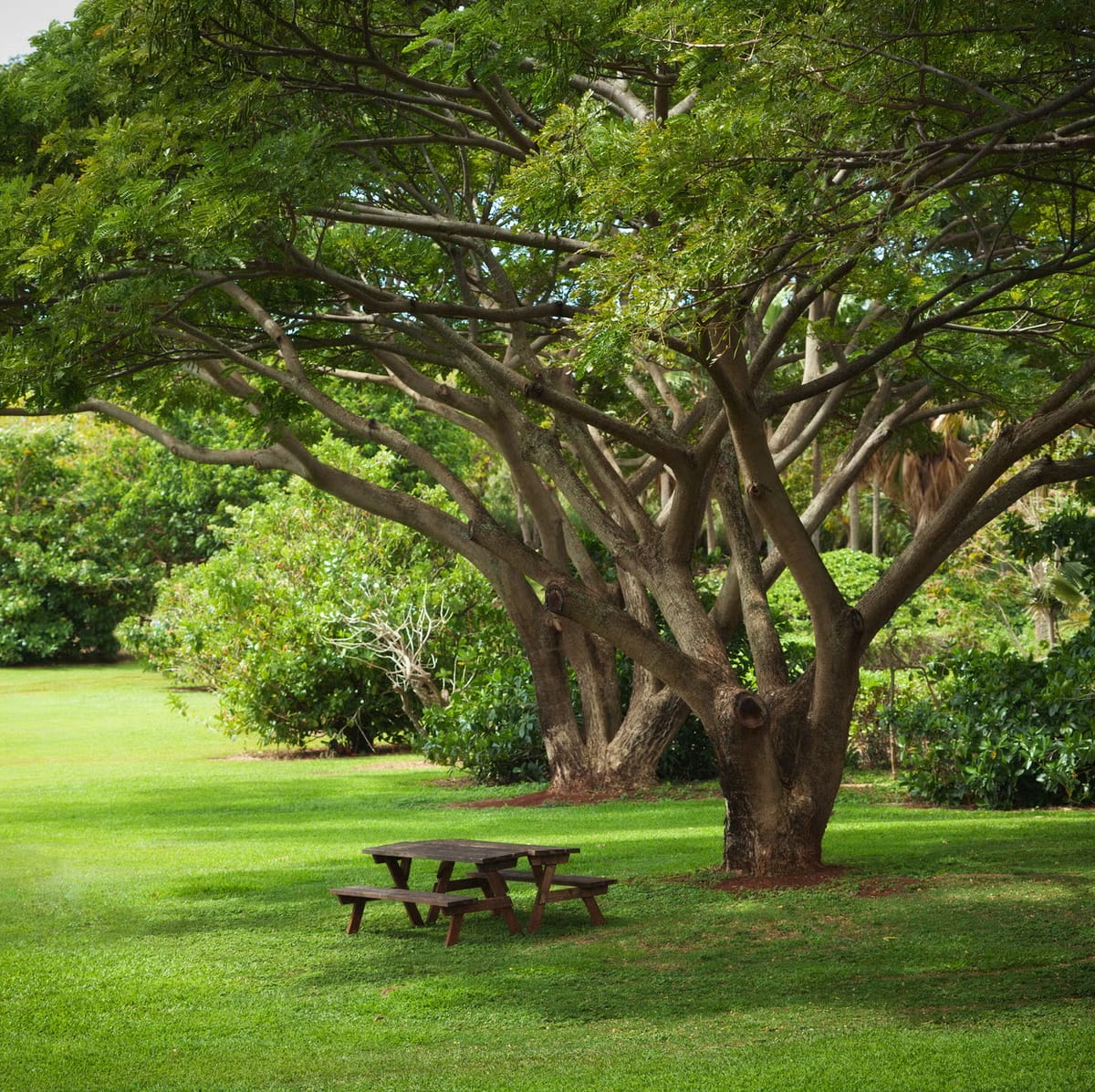
Top 5 Best Shade and Ornamental Trees for Nairobi Compounds
Nothing ruins a beautiful compound faster than a tree with destructive roots. Discover the five best shade and ornamental trees for Nairobi compounds that provide beauty, shade, and privacy without threatening your hardscaping.
Read More
The Best Live Fence Plants for Nairobi Properties: Security, Privacy, and Growth Rates
A perimeter wall in Nairobi costs KES 3,000-6,000 per metre. A live fence costs a fraction of that while providing security, privacy, and year-round protection. Discover the three most effective species for Nairobi's climate.
Read More
The Ultimate Nairobi Landscaping Guide: Best Trees to Plant for Privacy, Shade, and Fast Growth
Your Nairobi plot becomes a living asset with the right trees. This guide covers soil types, micro-climates, and the best species for privacy screens, shade canopy, and fast establishment across Karen, Ruaka, and beyond.
Read More