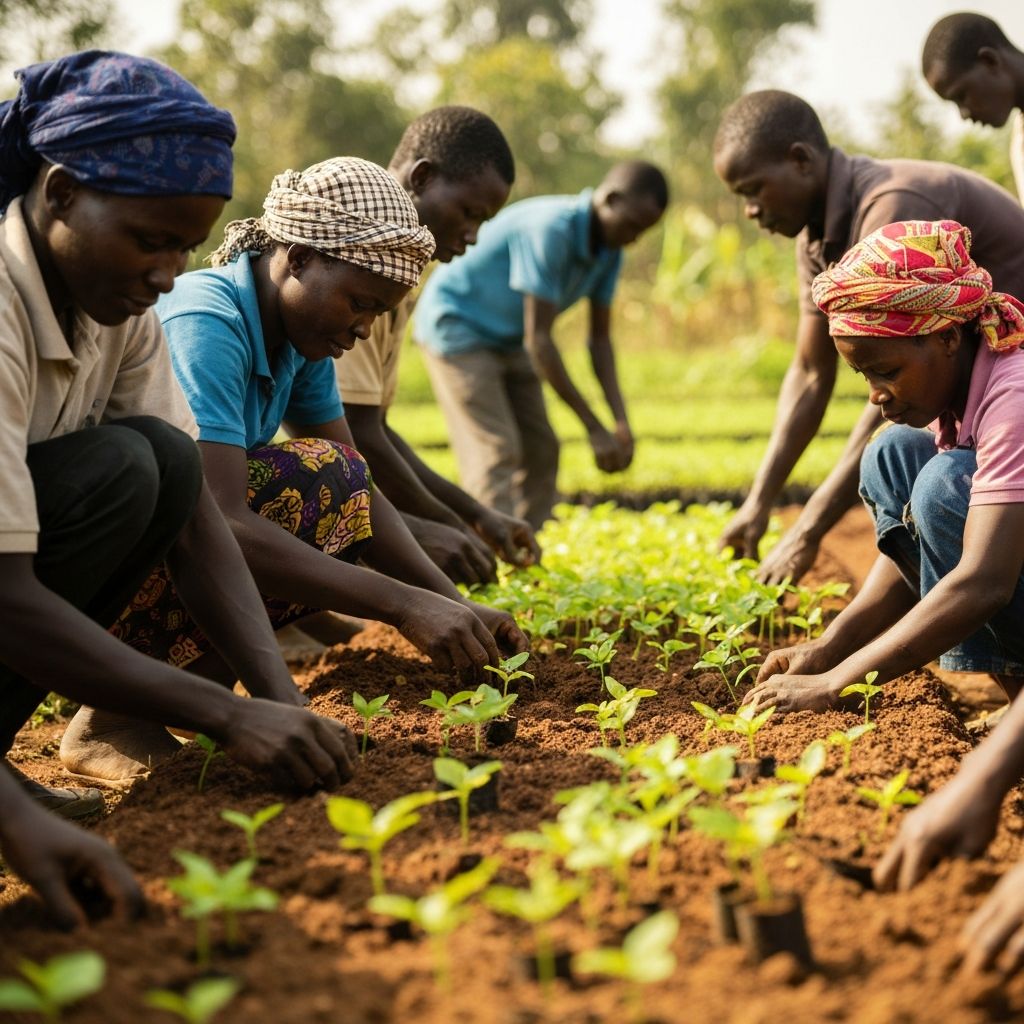
When to Plant Trees in Kenya: Planting Calendar by Region, Spacing and Survival Tips
Last updated: November 2026 | By the GreenAngels Tree Nursery Team
The best time to plant trees in most of Kenya is the start of the long rains, March to April, with the October to November short rains as a second window. Plant when the soil is thoroughly wet so roots establish before the dry spell, and check the Kenya Meteorological Department forecast for your area first.
Knowing when to plant trees in Kenya matters more than almost any other decision you make. A seedling put into dry soil spends its first weeks surviving instead of growing roots, and many never recover. This guide gives you a regional planting calendar, spacing for each species group, the planting steps from nursery to field, and a week-by-week care checklist for the first four months.
We are GreenAngels Tree Nursery, a KEFRI-certified wholesale nursery in Nyahururu, Laikipia County, supplying farmers, schools, counties, NGOs and corporates across Kenya.
Quick Facts
Main planting windows: long rains (March to May) and short rains (October to December).
Best moment to plant: after the first soaking rains, when the soil is wet well below the surface, not on the first drizzle.
Typical hole size: about 60 cm wide and 60 cm deep for most seedlings; larger for grafted fruit trees.
Watering: soak thoroughly at planting; in dry spells, deep watering once or twice a week.
The critical period: the first four months after planting.
Always check: the Kenya Meteorological Department seasonal forecast, because rainfall varies from year to year.
Long Rains vs Short Rains: How to Choose Your Tree Planting Season in Kenya
Kenya has two main rainy seasons. The long rains fall roughly from March to May, and the short rains roughly from October to December. The tree planting season Kenya farmers rely on is built around these two periods, because a seedling needs steady moisture while its roots grow into the surrounding soil.
Why timing matters:
- Roots need time. A seedling planted early in a rainy season has weeks of rain to anchor itself before the dry months.
- Late planting is risky. Seedlings planted at the tail end of the rains meet dry weather before they are established.
- Watering is costly. Planting with the rains cuts the water you must carry, which matters most for large plantings.
Long rains or short rains? In most of the highlands, the long rains are the main planting window and the short rains a useful second chance. In many Eastern and semi-arid areas, the short rains are often the more dependable season. Local experience counts: ask neighbours and your county forestry or agriculture office which season has served planters best in your area.
A word of caution on forecasts. Rainfall starts late, ends early or arrives in patches in some years. Treat the calendar below as a guide, then confirm against the seasonal outlook from the Kenya Meteorological Department. Plant when the ground is properly wet, not on a fixed date.
When to Plant Trees in Kenya: The Regional Calendar
Use this table as a starting point and adjust to what the rains are doing on your land.
| Region | Main planting window | Second window | Practical notes |
|---|---|---|---|
| Central and Aberdare highlands | Long rains, from March | Short rains, from October | Generally reliable rainfall. Plant early in each season so roots establish before the cooler, drier months. |
| Rift Valley and Laikipia | Long rains, from late March to April | Short rains, October to November | Rainfall can be patchy and dry spells are common, so mulch well and plan for watering. See our notes on timber and agroforestry in the central highlands. |
| Eastern and ASAL zones | Short rains, October to November (often the more dependable) | Long rains, March to April | Plant only after the soil is soaked. Choose species suited to dry conditions. See Machakos and desertification. |
| Western Kenya | Long rains, from early in the season | Short rains, around September to October | Rains usually start earlier and last longer, giving a longer planting window. Watch for waterlogging on low ground. |
| Coast | Long rains, April to June | Short rains, October to November | Heat and sandy soils dry quickly, so mulch heavily and water deeply during gaps in the rains. |
These windows are typical patterns, not guarantees. Your own altitude, soil and recent weather should have the final say.
Preparing the Site and Digging Planting Holes
Good preparation is cheap compared with replacing dead seedlings. Do it before the rains so that you can plant the moment the soil is wet.
- Clear the planting spots. Remove weeds and grass within about a metre of each hole. Grass competes hard for water.
- Mark your spacing. Use a measured string or stick so rows are even and easy to weed and inspect.
- Dig the holes early. A hole about 60 cm wide and 60 cm deep suits most seedlings. Grafted fruit trees usually do better in a larger hole.
- Separate the soils. Put topsoil in one pile and subsoil in another. Topsoil goes back in first, around the roots.
- Loosen the sides and base. Hard, smooth walls make roots circle inside the hole.
- Mix in organic matter. Well-rotted compost or manure, mixed with topsoil, gives roots a good start. Avoid fresh manure touching the roots.
- Fix drainage problems. Where water stands after rain, plant on a slight mound or choose another spot.
On compacted or rocky ground, dig earlier and wider, and let the holes weather before planting.
Tree Seedling Spacing in Kenya by Species Group
Spacing depends on how large a tree grows and what you want from it. The ranges below are common starting points. Adjust for your species, soil, rainfall and any intercropping.
| Species group | Typical spacing | Notes |
|---|---|---|
| Timber | About 2.5 m to 3 m between trees in woodlots; wider on farm boundaries | Closer spacing gives straighter stems but needs thinning later. |
| Indigenous | About 4 m to 6 m in mixed restoration planting | Mix species and heights for a natural canopy. Read more on indigenous trees in Kenya. |
| Fruit (smaller trees, such as guava, tree tomato and apple) | About 3 m to 5 m | Leave room for pruning and picking. |
| Fruit (large spreading trees, such as grafted Hass avocado) | About 6 m to 8 m | Wide spacing allows full canopy development. |
| Ornamental | About 3 m to 6 m, depending on mature canopy | Consider roots and overhead lines near buildings. |
| Live fence | About 0.5 m to 1 m apart in a line | Close planting makes a dense barrier. See live fence plants for Nairobi. |
Not sure what suits your land? Browse the GreenAngels product range and tell us your site conditions and purpose.
How to Plant Tree Seedlings: Steps From Nursery to Field
Follow these tree planting steps on planting day.
- Keep seedlings moist and shaded. Water them before transport, and hold them in shade at the planting site. Never leave seedlings sitting in sun.
- Carry by the bag, not the stem. Lift the polybag from underneath to keep the soil ball intact.
- Wet the hole. If rains have not soaked it, pour water into the hole and let it drain.
- Remove the polybag carefully. Slit it down the side and slide it off without breaking the root ball. Do not plant with the bag on.
- Place the seedling upright. The root collar, where stem meets root, should sit level with the soil surface. Planting too deep or too shallow both cause stress.
- Backfill with topsoil first. Fill around the roots, then firm the soil gently with your hands. Remove air pockets without crushing the roots.
- Water thoroughly. Soak the seedling right after planting, even in rain, to settle the soil.
- Mulch. Spread grass, leaves or crop residue around the stem in a ring, keeping it slightly away from the stem itself.
- Stake if needed. Tall or exposed seedlings may need a stake to prevent wind rocking.
- Guard the seedling. Fence or guard it against livestock before you leave the site.
Planting for the long rains? Order before the rush.
Seedling demand rises sharply before the March to May rains. Request a quote for your planting-season order with your species, quantity, location and target planting date, and we will confirm what is achievable.
Protecting Seedlings From Livestock, Termites and Drought
Planting is only the start. Three threats cause most early losses.
Livestock. Goats and cattle browse and trample young trees in a single visit. Use tree guards or fencing, and keep animals out of the planted area for the first season.
Termites. Termite damage is worst in dry soils and during dry spells. Keep dry mulch slightly away from the stem, avoid planting right beside active mounds, and inspect the base of each seedling weekly during the first month. Ask your nursery about protection that suits your soil.
Drought. If the rains stop early, seedlings need water. Deep, infrequent watering encourages roots to grow downward, while light daily sprinkling keeps roots shallow. Mulch holds moisture between waterings.
Common Mistakes That Kill Tree Seedlings
Most failed plantings trace back to a handful of avoidable errors.
- Planting on the first drizzle. Light rain wets the surface only. If the soil is dry below, seedlings suffer when the rain stops.
- Planting in dry soil with no water plan. This is the single most common cause of early losses.
- Leaving the polybag on. The bag confines the roots and stunts the tree.
- Planting too deep or too shallow. Buried stems can rot; exposed roots dry out.
- Skipping mulch. Bare soil loses moisture fast.
- No protection from livestock. One day of browsing can erase months of work.
- Letting grass crowd the seedling. Weeds take water and light.
- Poor spacing. Trees set too close compete; trees set too far apart waste land.
- Buying weak seedlings. Check that seedlings are sturdy, healthy and hardened off before you accept delivery.
- Planting everything at once with no one responsible for aftercare. Name a person for each planted area.
How to Make Tree Seedlings Survive: A 4-Month Care Checklist
The first four months decide whether a tree establishes. This checklist lines up with our 4-month Growth Guarantee, so you can monitor seedlings and report any problems in good time.
| Week | What to do |
|---|---|
| Planting day | Water thoroughly, mulch, guard against livestock, and record the number planted and the date. Take dated photos. |
| Week 1 | Check every seedling for wilting, tilting or animal damage. Water if the soil is dry below the surface. |
| Week 2 | Re-firm soil that has settled or washed away. Check for termites at the stem base. |
| Week 3 | Weed a one-metre circle around each seedling. Water deeply if rain has been poor. |
| Week 4 | Count survivors and note any deaths and likely causes. Top up mulch. |
| Weeks 5 to 8 | Inspect weekly. Water deeply once or twice a week during dry spells. Keep the circle weeded. Repair guards and fences. |
| Weeks 9 to 12 | Continue weeding and watering as needed. Check stakes are not cutting into the stem. Look for pests and disease. |
| Weeks 13 to 16 | Do a full survival count, with photos. Report failed seedlings promptly. Plan the next round of aftercare. |
Keep a simple record sheet: date, number alive, number dead, suspected cause and action taken. These records improve your planting and support any replacement claim.
When to Replace Failed Seedlings
Replace failures early, in the same rains, so the new seedling has a fair chance of catching up.
- Check at week 4 and again at week 8. Count survivors against the number planted.
- Find the cause first. Replacing a seedling killed by termites or livestock without fixing the problem wastes another seedling.
- Prepare the hole again. Loosen the soil, add fresh topsoil and compost, and plant as before.
- Report quickly under the warranty. Our Growth Guarantee offers free replacement if trees do not thrive within the four-month period. Read the terms for how to report losses, and send your records and photos.
- Do not wait for the next season. A gap in a row or woodlot is hard to fill later.
Planning a Bulk Planting for Schools, Counties and NGOs
Large planting days succeed or fail on logistics. If you are planting thousands of seedlings, plan backwards from the date you want them in the ground.
- Fix the target planting week. Tie it to the seasonal forecast, with a fallback week in case the rains are late.
- Size the order. Divide the area by the area each tree needs, and add an allowance for replacements.
- Order early. Nurseries need time to prepare and dispatch seedlings, and demand peaks just before the rains.
- Prepare holes ahead. Dig before delivery so seedlings go straight from the truck to the ground.
- Plan delivery points. Seedlings should arrive close to planting sites and be kept shaded.
- Assign teams. Give each group a row or block, and a named person responsible for aftercare.
- Arrange tools and guards. Spades, buckets, mulch and tree guards must be on site on the day.
- Plan aftercare funding and people. Schools can give classes responsibility for blocks; counties and NGOs should budget for watering and monitoring.
Buying for a county, NGO, school or corporate project? Our guide to buying tree seedlings in bulk in Kenya explains how to specify an order, verify seedling quality and write a request for quotation.
Frequently Asked Questions
What is the best month to plant trees in Kenya?
For most of Kenya the best months are March and April, at the start of the long rains. In Eastern and ASAL areas, October and November short rains are often more dependable. Local rainfall varies each year, so wait for the first soaking rains and check the Kenya Meteorological Department forecast before you dig.
Can I plant trees in the short rains?
Yes. The October to December short rains are a good second window, especially in Eastern Kenya and parts of the Rift Valley. Plant early in the season so seedlings have several weeks of rain before the dry months. Mulch heavily and be ready to water if the rains end early.
Can I plant trees in the dry season?
It is possible only if you can water reliably, and it costs more in labour. Planting in dry soil without irrigation is the commonest cause of early losses. If you must plant outside the rains, use deep holes, thick mulch and a fixed watering routine, and plant fewer seedlings you can look after.
How deep and wide should a planting hole be?
A hole about 60 cm wide and 60 cm deep suits most seedlings, and grafted fruit trees often benefit from something larger. Loosen the sides so roots can spread, and keep topsoil separate from subsoil. Always follow the guidance for your species and soil type; hard or rocky ground needs extra effort.
How far apart should I plant trees?
Spacing depends on the mature size of the tree and your purpose. Woodlots are usually planted closer than fruit trees, and live fences closer still. Use the spacing table in this guide as a starting point, then adjust for species, soil and whether you will intercrop.
How often should I water new seedlings?
Soak each seedling thoroughly at planting. During dry spells, deep watering once or twice a week is better than light daily sprinkling, because it pushes roots down. Increase frequency in hot, sandy soils and reduce it when rain returns. Mulching around the stem helps hold moisture between waterings.
Should I remove the polybag before planting?
Yes, remove the polybag before planting but keep the soil ball intact. Slit the bag down the side, slide it off, and place the seedling at the same depth it grew in the nursery. Leaving the bag on restricts roots and is a common cause of poor establishment.
How do I protect seedlings from termites and livestock?
Guard each seedling with fencing or tree guards and keep livestock out of the planted area. For termites, keep dry mulch slightly away from the stem, avoid planting right beside active mounds, and inspect seedlings weekly in the first month. Ask your nursery about protection suited to your soil.
What should I do if my seedlings die?
Check the cause first: drought, waterlogging, livestock, termites or poor planting. Replace failed seedlings early in the same rains so they catch up. If you bought from GreenAngels, report losses under the 4-month Growth Guarantee, which offers free replacement if trees do not thrive.
How early should I order seedlings for the rains?
As early as you can, before the rains begin. Nurseries need time to prepare, harden off and dispatch seedlings, and demand peaks just before planting season. Tell us your species, quantity, location and target planting date, and we will confirm what is achievable for your order.
Plan Your Planting Season Before the Rains Arrive
Getting the timing right is the cheapest way to improve survival. The pattern is simple: know when to plant trees in Kenya for your region, prepare holes and spacing early, plant into properly wet soil, protect seedlings, and follow a four-month care routine. Local rainfall changes every year, so keep one eye on the Kenya Meteorological Department forecast and let the soil, not the calendar, make the final call.
For guidance on species and growing conditions, you can also read the Kenya Forestry Research Institute and the Kenya Forest Service resources.
Ready to plant this season? Request a quote for your planting-season order. Tell us your species, quantity, planting location and target planting date, and we will confirm what is achievable. Orders placed well ahead of the rains give you the best chance of seedlings arriving in time, and every GreenAngels order comes with our 4-month Growth Guarantee.