Introduction
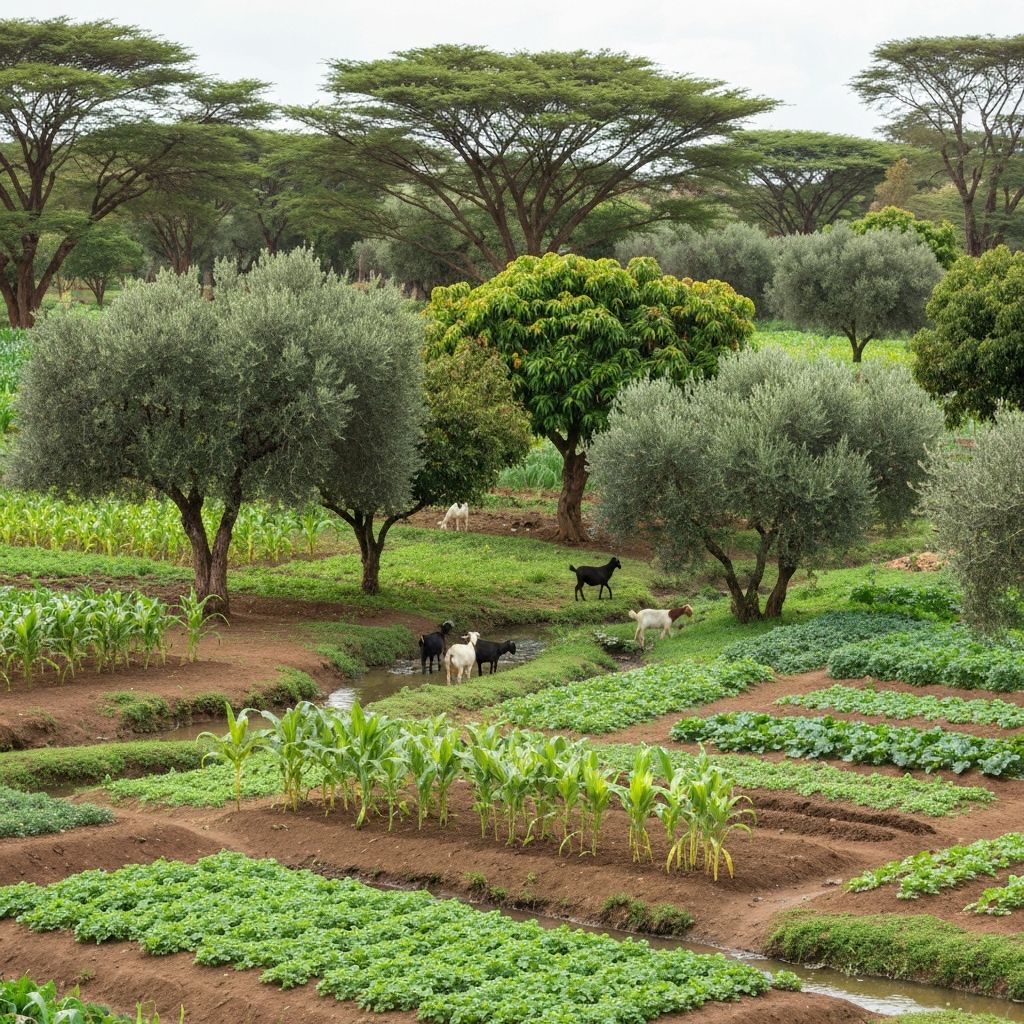
Agroforestry is a land use management system in which trees or shrubs are grown around or among crops or pastureland. This intentional combination of agriculture and forestry has been practiced for centuries, but modern agroforestry systems are scientifically designed to maximize benefits for farmers, the environment, and local communities.
In Kenya, agroforestry is gaining recognition as a sustainable solution to many agricultural challenges, including soil degradation, climate change, and food insecurity. With over 80% of Kenya's land classified as arid or semi-arid, agroforestry offers a way to make these marginal lands more productive while restoring ecosystem health.
Benefits of Agroforestry
Soil Health Improvement Trees in agroforestry systems contribute to soil health through:
- Nitrogen fixation (leguminous trees like Acacia species)
- Deep root systems that bring nutrients to the surface
- Leaf litter that adds organic matter to the soil
- Reduced soil erosion through root stabilization
Climate Change Mitigation Agroforestry systems sequester carbon more effectively than monoculture farming:
- Trees absorb CO2 from the atmosphere
- Soil organic matter increases carbon storage
- Reduced need for chemical fertilizers lowers emissions
Biodiversity Enhancement Integrating trees with crops creates diverse habitats that support:
- Beneficial insects and pollinators
- Birds and small mammals
- Soil microorganisms
- Native plant species
Economic Benefits for Farmers Agroforestry provides multiple income streams:
- Timber and wood products
- Fruits and nuts
- Medicinal plants
- Gum Arabic and other resins
- Shade-grown crops (coffee, tea)
Best Practices for Agroforestry in Kenya
Site Selection
- Consider rainfall patterns and soil type
- Assess existing vegetation and land use
- Evaluate market access for tree products
Tree Species Selection Choose species based on:
- Climate adaptability
- Growth rate and maturity
- Market value of products
- Compatibility with crops
System Design Common agroforestry systems in Kenya:
- Alley cropping: Rows of trees with crops planted between them
- Silvopasture: Trees integrated with livestock grazing
- Forest gardens: Multi-layered systems mimicking natural forests
- Boundary planting: Trees along field edges and boundaries
Management Practices
- Regular pruning to control shade
- Proper spacing between trees and crops
- Integrated pest management
- Sustainable harvesting techniques
Success Stories in Kenya
Makueni County
The Makueni County government has implemented large-scale agroforestry projects, planting over 50,000 trees in partnership with GreenAngels. These projects have shown significant improvements in soil health and farmer income.
Nyeri County
Coffee farmers in Nyeri have adopted shade-grown coffee systems using Grevillea robusta trees, resulting in higher quality beans and additional income from timber.
Isiolo County
Pastoralist communities in Isiolo have established gum gardens with Acacia senegal, providing reliable dry-season income while restoring degraded rangelands.
Conclusion
Agroforestry represents a sustainable path forward for Kenyan agriculture. By integrating trees with crops and livestock, farmers can improve their livelihoods while contributing to environmental conservation. With proper planning, species selection, and management, agroforestry systems can transform Kenya's agricultural landscape and support the country's Vision 2030 goals for sustainable development.